


What does it mean to be carbon neutral?
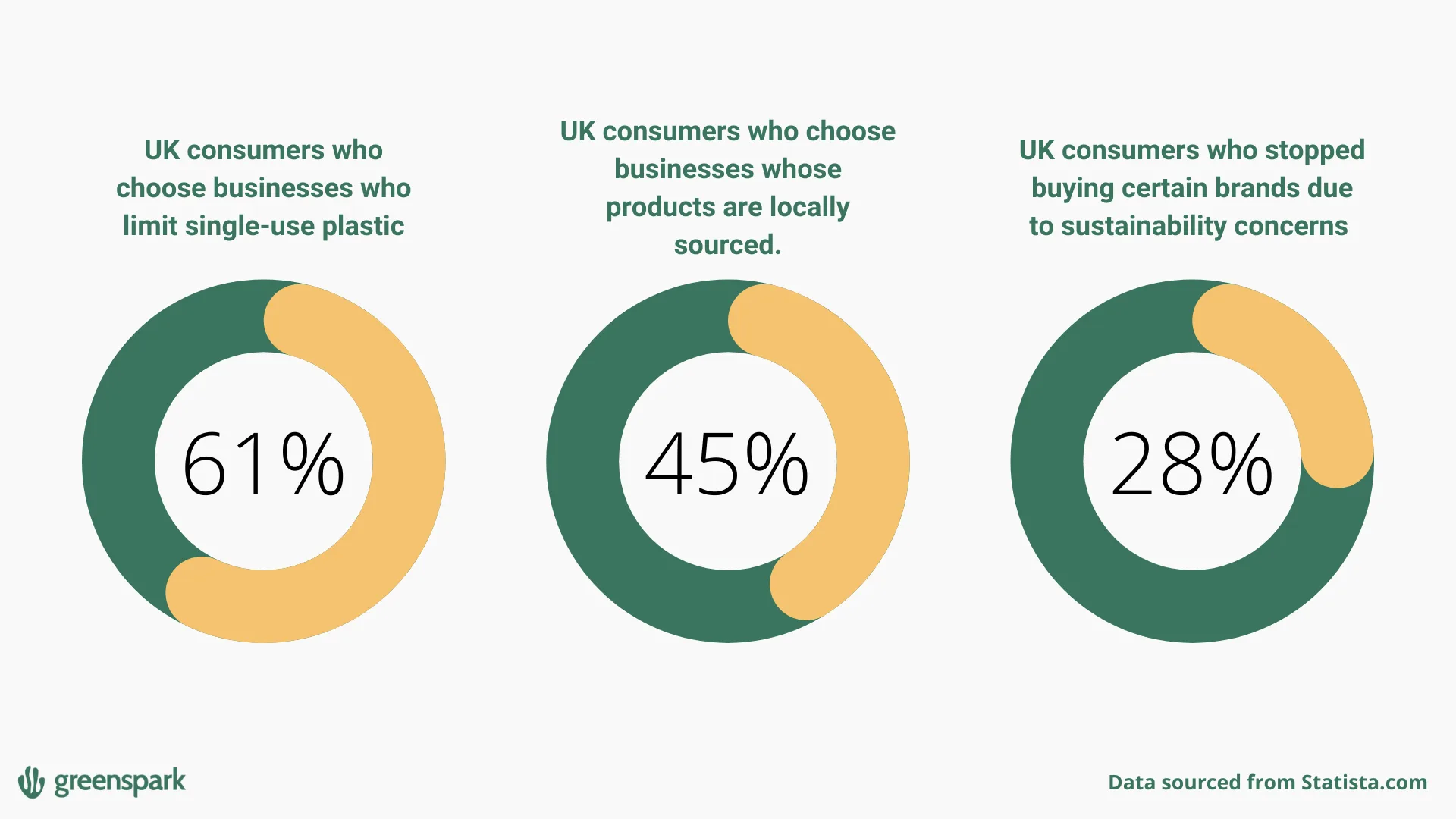
A few companies have already committed to carbon-neutral or renewable-energy targets, but the bigger shift is that consumers increasingly expect lower-waste, more sustainable choices. Of UK consumers, 61% now limit purchases of products wrapped in single-use plastics, and 66% say they would pay more for sustainable goods. Here are a few companies that have already gone carbon neutral or are well on their way to doing so.
- Sky - carbon neutral since 2006
- Logitech - to be powered by 100% renewable energy by 2030
- M&S - carbon neutral since 2007
- Innocent - to be carbon neutral by 2030
These mega-companies know exactly what is powering this movement to neutrality. Yes, it’s for the benefit of our planet but also it’s because their consumers are becoming more aware of the damage caused by greenhouse gases.
No matter what the size of your business is or what your sell, consumers have sustainability at the forefront of their minds when choosing where to spend their money.
Of UK consumers, 61% now limit their purchases of products wrapped in single-use plastics while 66% of people would be willing to pay more for sustainable goods.
With this in mind, it’s vital that companies start to think about moving to a more sustainable way of doing business. We know - it probably sounds daunting and expensive. So we’ve compiled a list of eight ways you can join the Race to Zero and make your business more sustainable.
Invest in sustainable and eco-friendly packaging
Consumers have become much more conscious of the damage single-use plastics cause. They’re turning to reusable storage containers, bags for life, loose products and recyclable packaging.
If your business requires packaging for selling, storage or shipping, one of the first steps you can take to reduce your carbon footprint is to turn to environmentally friendly packaging such as paper and cardboard. If you really want to make a difference, there are compostable forms of packaging that leave zero amounts of waste behind.
If your business uses plastic packaging, this is a good time to shift toward paper, cardboard, or other lower-waste alternatives. In the UK, plastic packaging with less than 30% recycled content is subject to Plastic Packaging Tax, and the rate is £228.82 per tonne from 1 April 2026.
Offer work from home jobs
Can your employees work from anywhere? Do they have to be in the office seven days a week or could they do their work from the comfort of their own home?
If you can provide a work from home benefit for your business, you will help to take cars off the road and reduce the carbon emissions of each employee. Not only that, you will reduce the energy bills that come along with a physical office space such as electricity, heating and cooling.
If your team can work remotely, offering that option can reduce commuting and lower the energy use tied to a physical office. During 2020, Shopify had 6,000 employees working from home and reported a 29% drop in carbon emissions during that period.
Provide public transportation benefits
So maybe your business can’t allow people to work from home, you need them physically at their place of work. Why not offer employee benefits which include incentives to commute to work on public transport.
Buses and trains are a great green way to travel. Offering subsidised travel passes for your employees is a strong way to encourage staff to use public transportation instead of their personal cars.
Other benefits include incentives for carpooling, joining a cycle to work scheme or charging pods for electric vehicles.
Make your workspace more sustainable
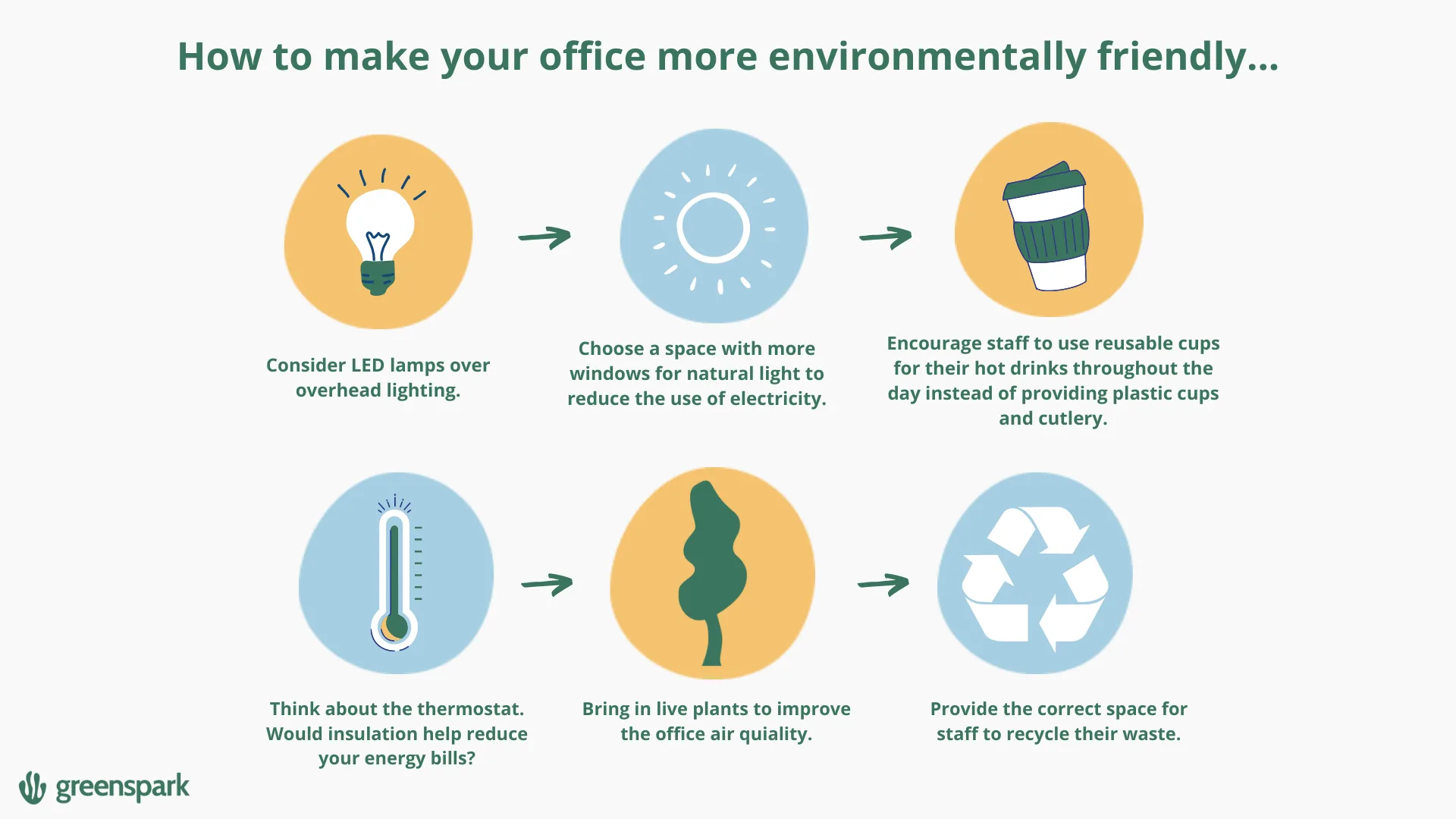
As mentioned above, it’s not always possible to work from home. If you do need a workspace, there are a few things you can do to make your office or warehouse more efficient.
Look at your delivery options
If your company makes deliveries, it’s time to look at how you can reduce the number of journeys you make or how you make them. Some alternative delivery options include:
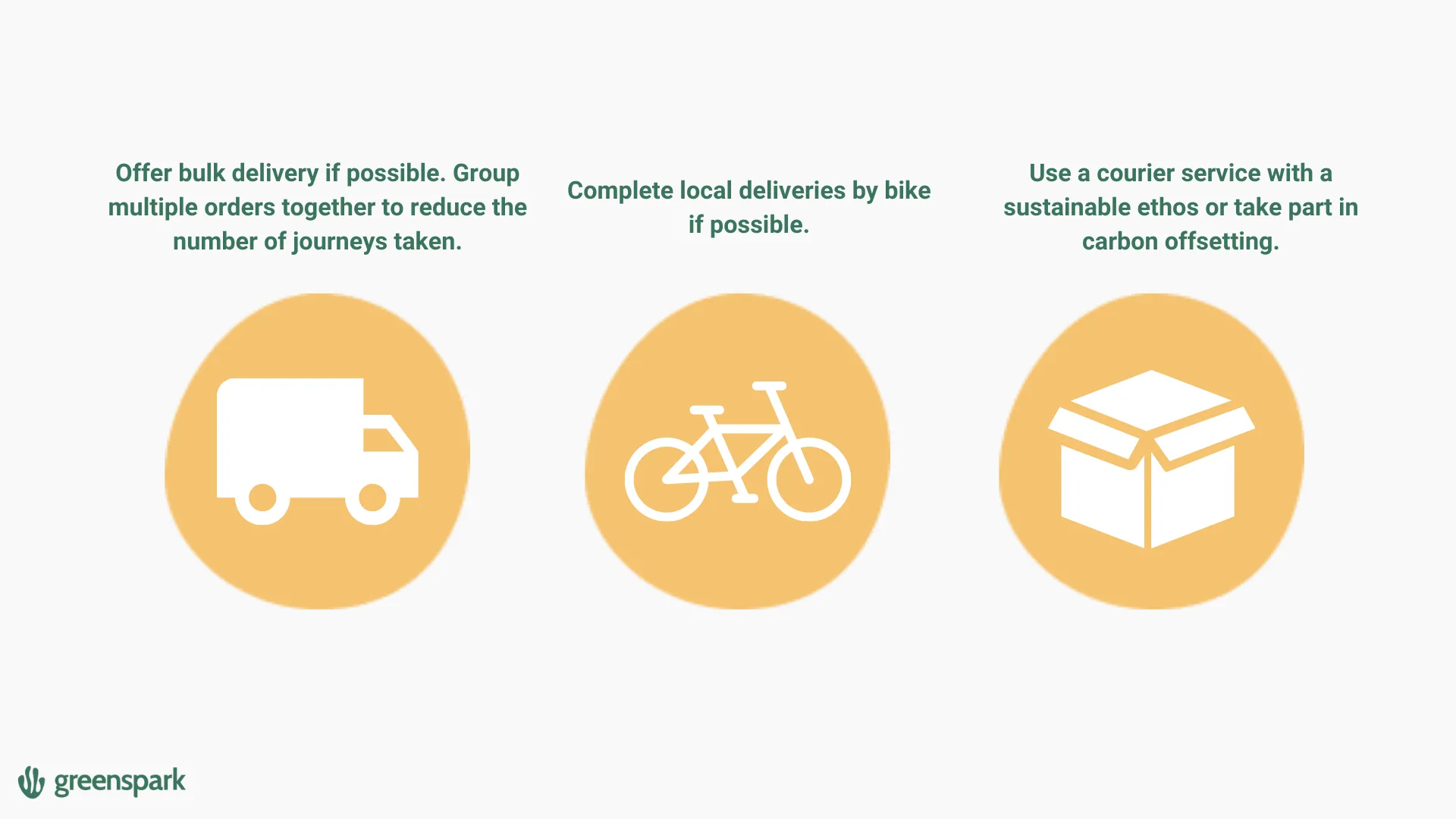
If these aren’t viable options for your business, have a look at planning more eco-friendly routes for your drivers. Optimise your routes based on time and cost-efficiency. Ship from local stores or micro-fulfilment centres instead of regional warehouses.
Lastly, engage with your customer base. Do they tend to purchase multiple items at once? If so, would they be happy to wait longer delivery times if it means their items could be bulk delivered?
Go paper-free
With technology being so advanced now, the need for paper is dwindling. Look to using digital tools which allow you to share documents, edit in real-time and collaborate with others.
Throw away traditional filing methods and use digital storage solutions that are cloud-based. Finances and accountancy can also be done using digital software as well as HR, operations and presentations.
With digital tools now widely available, going paper-free can help teams share documents, edit in real time, and store files digitally instead of relying on traditional filing methods. This keeps everyday operations lighter and easier to manage.
Pay attention to sourcing
Sustainability starts at the source. One of the very first things you can do in your journey to sustainability is to really pay attention to the products you're sourcing. Here are a few questions to ask yourself in the process?
- Are you practising green procurement?
- Are they made with recyclable/renewable or biodegradable materials?
- Are you sourcing your items as locally as possible?
If you’re putting in the hard work and dedication to being more environmentally friendly, ensure that the people you are working with are following the same ethos.
Pros and Cons
Pros:
- Reduces carbon footprint through practical steps: The article outlines actionable ways such as investing in eco-friendly packaging and offering work from home jobs that directly lower greenhouse gas emissions.
- Aligns business with consumer values: With 61% of UK consumers limiting single-use plastics and 66% willing to pay more for sustainable goods, adopting these measures can improve brand loyalty and customer appeal.
- Potential cost savings and incentives: Although some sustainable options may seem costly upfront, the article highlights upcoming regulations like the Plastic Packaging Tax and benefits such as reduced office energy bills and subsidized public transport passes that can offset expenses.
- Flexible approaches for different business types: Whether a business can offer remote work or needs physical offices, the suggestions include alternatives like public transport benefits and workspace efficiency improvements.
Cons:
- Initial costs and complexity of transition: Switching to sustainable packaging or retrofitting workspaces may require upfront investment and operational changes that could be challenging for some businesses.
- Not all roles can support remote work: The article acknowledges that some employees must be onsite, limiting the ability to reduce emissions through work from home policies.
- Partial energy shift to employees’ homes: While remote work reduces office emissions, it increases energy use at employees’ residences, which may offset some environmental benefits.
Make an impact
Finally, one of the easiest steps you can take to make your business more sustainable is to invest in making a positive impact. That means investing a little into projects that offset carbon by planting trees, fighting plastic pollution and much more. Just because you can’t physically plant a tree doesn’t mean you can’t help important projects that do.
At Greenspark, we are the world’s first impact-as-a-service platform that is passionate about helping businesses grow their positive impact. We’ve made it as simple for you as possible. From signing up to integrating your store and setting your impact, it takes just five minutes and from there on out it’s all automated. With just a little effort, you make a huge impact.
With every sale, subscriber or review, you can make a positive impact be it planting trees, rescuing plastic from the ocean or helping communities in Malawi use more energy-efficient cooking stoves.
Remember - you can’t go carbon neutral overnight. These changes take time. Do what you can to do your part and Greenspark is always here to help you on your way.
So, are you ready to join the Race to Zero now? Remember, it’s a marathon. Not a sprint.